EDUCATION ORDERS 1-877-290-8256

middle school Education

Research proven solutions for grades 5-8 astronomy education.

Request Information

starry night middle school...

The Research-Proven Best Way to Teach Space Science

Award-winning Starry Night Middle School for grades 5-8 is the only space science curriculum that combines an interactive sky simulator, lesson plans correlated to state and national standards and extensive teacher resources in one easy-to-use package.

Available April 25, 2007

Benefits Overview

Award-winning Starry Night Middle School for grades 5-8 is the only space science curriculum that combines an interactive sky simulator, lesson plans correlated to state and national standards and extensive teacher resources in one easy-to-use package.

Adopted by Arkansas and New Mexico, Starry Night Middle School has proven to be a highly effective instructional tool that guides teachers and engages students in their explorations and understanding of the Universe.

Starry Night provides:

  • Lessons plans correlated to state and national standards that meet curriculum needs
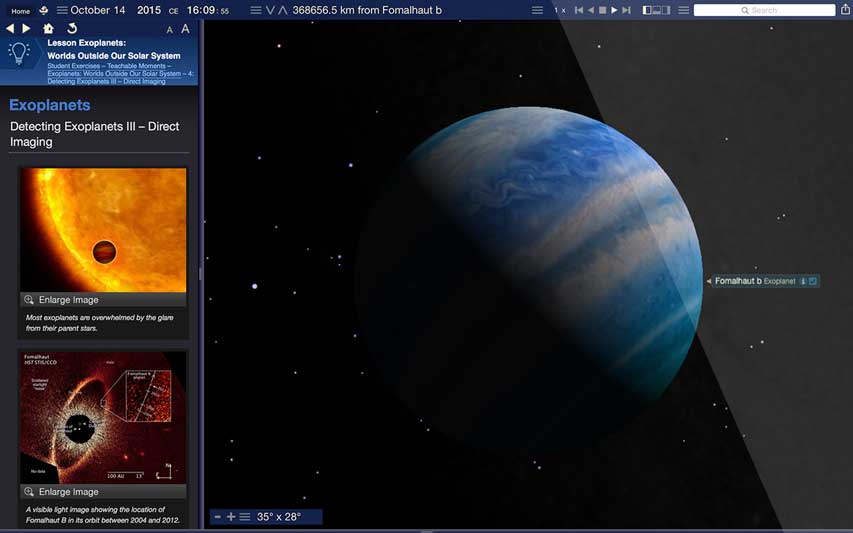
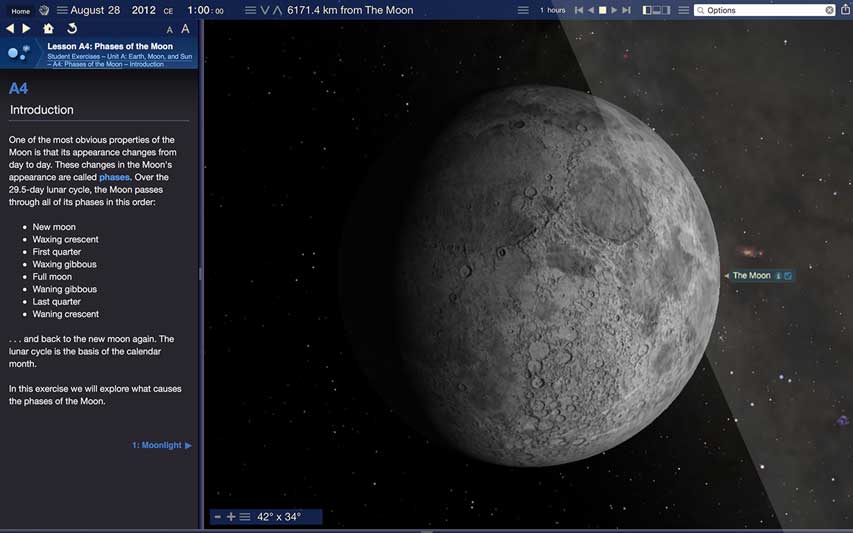
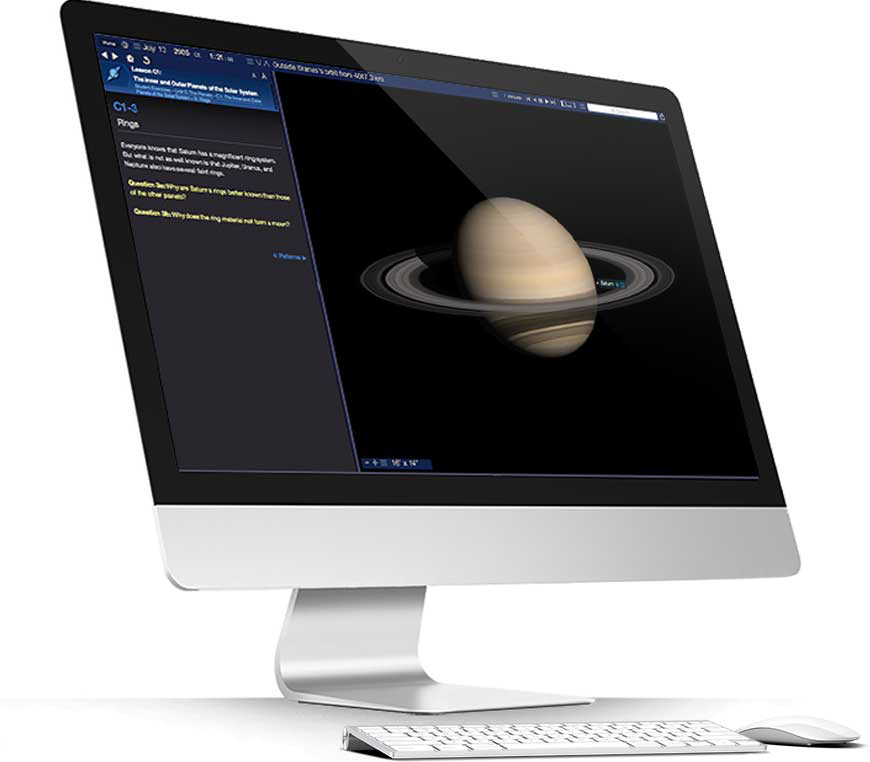
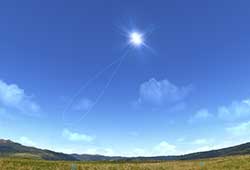
  • Accurate visualizations and simulations that allow students to make precise observations of Moon phases, motions of the Sun and planets and much more
  • Interactive computer exercises and hands-on activities that encourage questioning, experimentation and exploration and accommodate diverse learning styles
  • Pre- and post-assessment resources with recommendations for improved student performance
  • Flexible teaching models for easy adaptation to pacing and classroom needs
  • Opportunities to develop key skills: observation, data collection, analytical thinking and discovery
  • Extensions that connect to topics in math, physics, language arts, social studies and technology

Winner of ComputED's Best Educational Software Award, Starry Night has been hailed by reviewers and educators for providing "such unique and compelling experiences that it is destined to change lives."

Product Features

Meeting all your curriculum standards is easy with Starry Night Middle School, an integrated space science curriculum solution written by teachers for teachers.

Aligned to 5th through 8th grade national and state science standards, Starry Night Middle School introduces astronomy through innovative lessons that teach the critical space science concepts for science assessments.

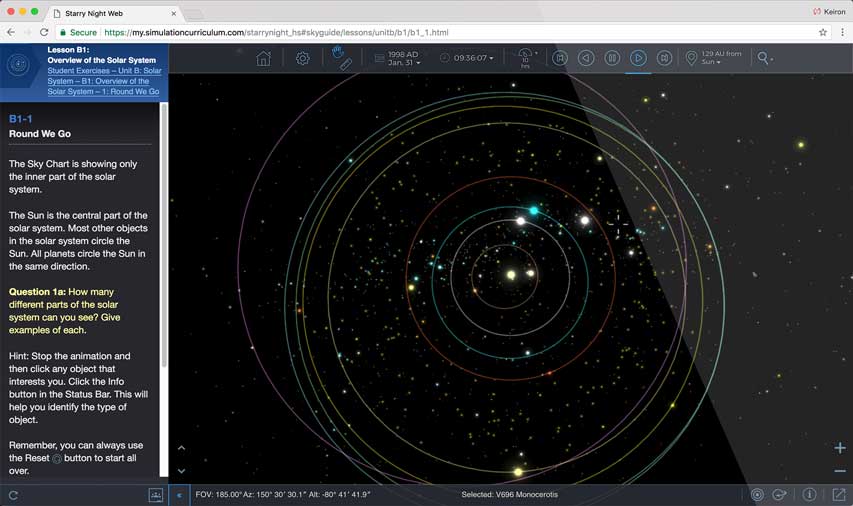
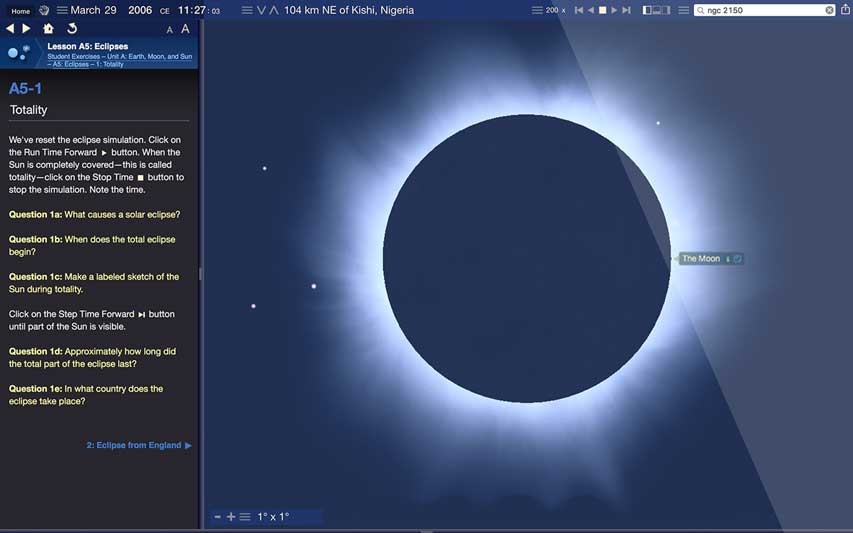
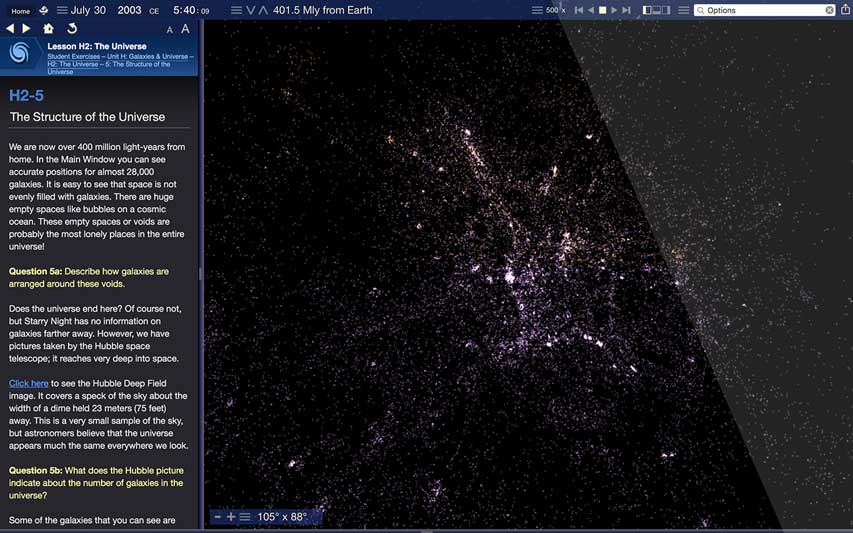
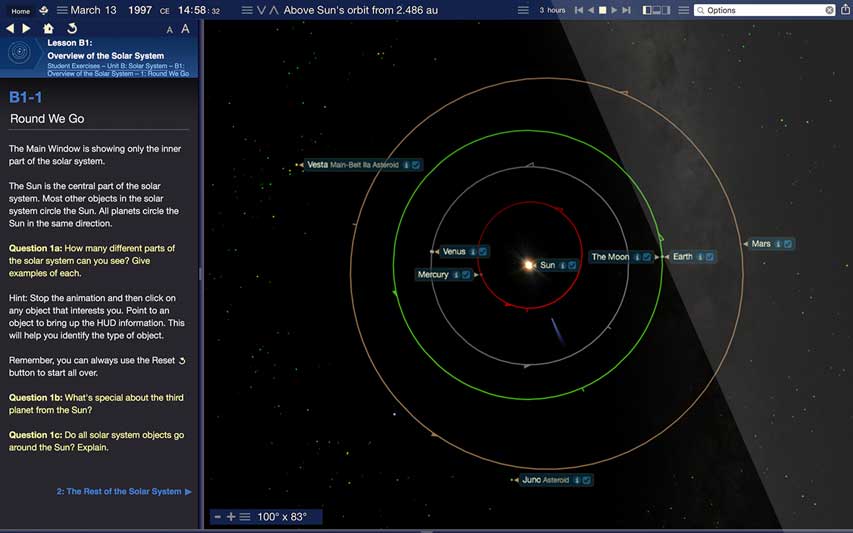
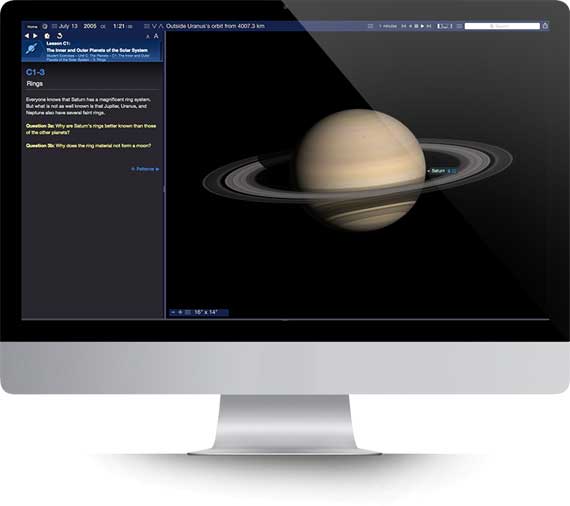
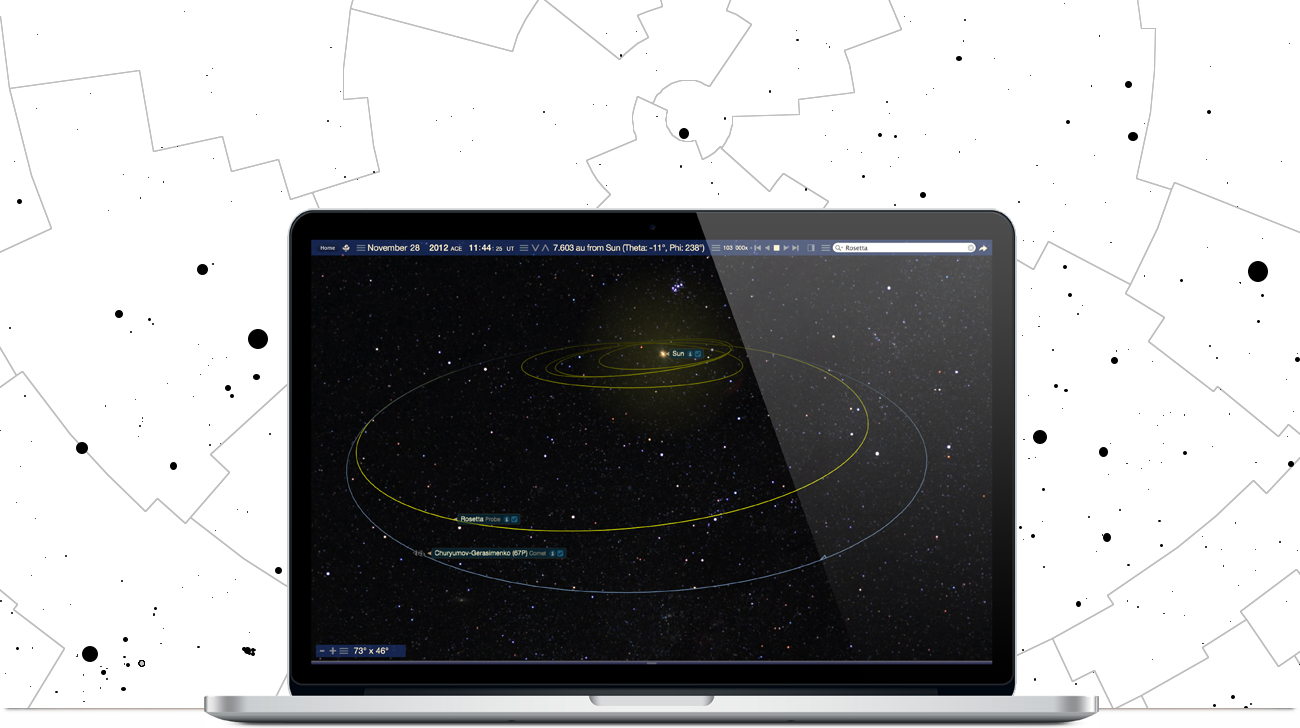
Starry Night's realistic depiction of the universe and its stunning 3D graphics and multimedia make even the most complex and abstract astronomy topics easy to teach and understand.

Students will instantly grasp how movements of the Earth create seasons, why the night sky appears to move, and much more.

The ability to interactively manipulate time and space encourages questioning, experimentation and exploration. Guided inquiry-based learning lets students make their own observations and draw their own conclusions.

Research confirms that Starry Night is a highly effective science instructional tool. Recent studies have concluded that accurate visualizations of celestial phenomena are key to gaining a correct understanding of astronomical concepts.

Complete with formative and summative assessment tests, detailed lesson plans, hands-on activities, student worksheets and computer exercises, Starry Night Middle School is sure to spark your students' fascination with the Universe.

Starry Night Middle School is:

  • US and Canadian curriculum specific
  • Full of pre-tested activities and exercises
  • Designed specifically for middle school students
  • Hands-on and interactive
  • Fun and simple to use
Modular and easy-to-use solution comes complete with:
  • 28 detailed lesson plans
  • Interactive computer exercises
  • Hands-on classroom activities
  • Conceptual background for teachers
  • Discussion questions
  • Assessment tests and answer keys
  • Resource lists
  • Appendices
  • Glossary of astronomical terms

New features highlight the latest theories and address classroom needs:

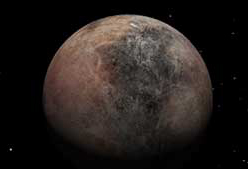
  • 4 lesson plans, focused on the reclassification of Pluto, unmanned space exploration, astrology and black holes
  • Math and observing extensions for most lessons
  • Revised and expanded assessment resources
    • Pre-assessment Idea Diagrams and Concept Maps identify pre-conceptions
    • Thinking Grids and Contrast and Compare charts develop logical and critical thinking skills
    • Drawing Completion activities and KWL charts assess student understanding
    • Easy-to-use Scoring Rubric evaluate learning of science content and process
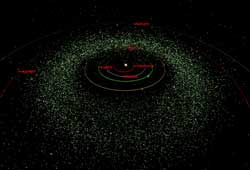
  • Expanded library of astronomy simulations
  • Lesson Plans at a Glance help you choose the lesson plans that best fit your curriculum requirement
  • QuickStart Guide for teachers new to astronomy or using Starry Night for the first time

Award-winning Starry Night software allows you to re-create these stunning simulations:

  • Travel through time from 4713 BC to 9999 AD
  • Visit 2.5 million stars
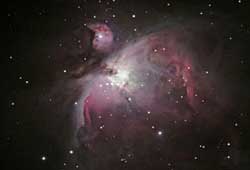
  • View exclusive Tully database and explore 13,000 deep space objects of the NGC-IC catalog
  • Fly through the universe in spaceship mode to experience the vastness of space
  • Plan observing sessions using Events Finder full of upcoming astronomical events
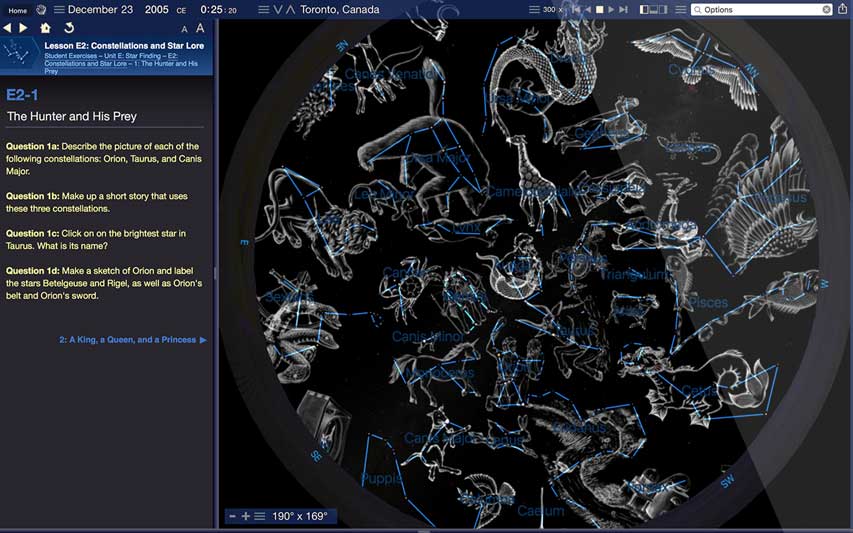
  • Turn on custom constellation illustrations to view the animals and people from Greek and Roman mythology.
  • And much more!
Praise & Testimonials:
"The universe is a big place. As a professional astrophysicist and dedicated educator, I know the challenge of finding fertile means to explain abstract cosmic topics. Starry Night makes teaching space science easy, and, dare I say, fun. Written by teachers for teachers, this brilliantly integrated curriculum tracks national science standards, and comes complete with assessment tools, detailed lesson plans, hands-on activities, student worksheets and, of course, the award-winning Starry Night software. For all your students, but especially for those who think astronomy is above their heads, you'll be amazed by how swiftly the universe comes down to Earth."

Neil deGrasse Tyson
Astrophysicist and Director, Hayden Planetarium
American Museum of Natural History
Photo © Dan Deitch


Adopted in New Mexico
Now available from Southwest Textbook Depository

Compliant in California
Use either Proposition 20 Lottery Funds or any Instructional Materials Funding Realignment Program Funds remaining after purchase of required instructional materials.

Adopted in Arkansas

SMART Board™ interactive whiteboard Ready

What's Included

Three-ring binder Includes:

  • Award-winning Starry Night astronomy simulation software, customized for student use
  • 28 Lesson plans complete with extensive teacher resources, hands-on activities, computer exercises, worksheets and assessments
  • SkyTheater DVD with more than an hour of video of dramatic and realistic visualizations of astronomical phenomena
  • QuickStart Guide for teachers new to astronomy or using Starry Night for the first time
To run Starry Night Middle School you need:

Windows: Requires Windows XP, 500 MHz or higher processor, 128 MB RAM and 900 MB of hard disk space. 32 MB OpenGL capable graphics card. Minimum recommended monitor resolution of 1024 x 768 pixels.
Macintosh: Universal Binary runs natively on Intel and PPC Macintosh computers. Requires OS X 10.3.9 or higher, G3 450 MHz or higher processor, 128 MB RAM and 900 MB of hard disk space. Will not run on OS 9.x or earlier. 32 MB OpenGL capable graphics card. Minimum recommended monitor resolution of 1024 x 768 pixels.

Basic support for joysticks recognized by Windows XP and Mac OS X.

Requirements for Video DVD: Home DVD player and TV, or computer with DVD player.

Lesson Plan A2 Student Interface

The Welcome Screen introduces the student to using the SkyGuide interface and gives an overview the lesson.

Question 1: Is the Earth much closer to the Sun at any time during its motion around the Sun?
Question 2: Record the time of sunrise and sunset and the approximate direction of the Sun when it is at its highest point.

Question 3: Describe how the motion of the Sun is different in summer and winter.
Question 4: What do you notice about the tilt of the Earth as it circles the Sun?


Question 5: How much sunlight does North America get compared to South America?


Question 6: On which continent does the Sun shine more directly?


Extra credit can add another level of understanding beyond what is covered in the basic lesson.


Resources show other places in Starry Night where the lesson subject is covered.
Reset
Up
Down